Dear Romans: Biblical Prose II
by the Rev. AJ Ochart
Scripture
Sermon Notes
This week we conclude the Summer Sermon Series, ‘How to Read the Bible’ based on the Bible Project series by the same name.
Over the summer, we have considered the Hebrew and Christian scriptures as a whole, and how we are meant to read them over and over as meditation literature. We have looked at some of the features of biblical narrative, The overall narrative of our scriptures, narrative in the Hebrew scriptures, and the unique narrative of the gospels. We considered the use of poetry in our scriptures as a retelling of narrative and the unique style of apocalyptic literature. Last week we began looking at biblical prose with consideration of the ‘Law’ or Torah instruction.
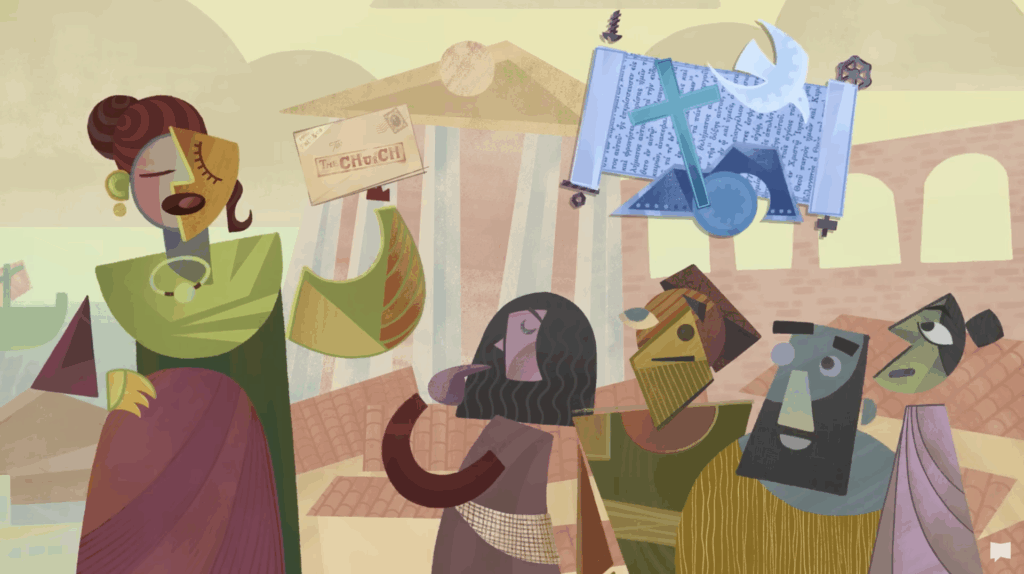
This week we consider the prose/discourse most prominent in the Christian Scriptures, New Testament ‘Epistles’ or letters. These writings were originally constructed as literal letters from apostles (or those who claimed that they were apostles) to individuals, individual house churches, or groups of house churches in a particular area. These writings, many of which predate the writing of the gospels, give us some insight into the life of the fledgling sect of Jesus-followers.
Our example this week will be the letter to the Romans, written by the apostle Paul to the house churches in Rome, whom he had never met. This letter, likely written later in Paul’s ministry, provides a beautiful look into Paul’s later theology and understanding of the Gospel. While no one knows exactly who established the churches in Rome, we do know that they were made up of both Jewish believers who understood Jesus as Messiah, and Gentile believers who saw Jesus as Lord (a decidedly more seditious claim). There was some natural tension between these two groups. Roman culture was a highly stratified and class-driven one, where jockeying for positions of power and status was the norm. Roman men from well-to-do families were clearly on-top with men of lower status, women, children, and enslaved people below them. These Romans (of any station) saw themselves as more important than their fellow Christians who were Jewish. The Jewish believers, on the other hand, saw themselves as God’s ‘chosen people’ who were clearly more important than any dirty gentile believers. God may have extended grace outside of the family of Abraham, but they were clearly better. The early church was also plagued by inter-church arguments about what to do with things like food sacrificed to idols and the appropriate day to worship. People who found each other on opposite sides of these debates began seeing each other not as having different perspectives, but as enemies (something we have no frame of reference for).
Paul writes this letter to the church that he has heard about to help them understand the good news of Jesus and to prepare a missionary trip there (and beyond). Paul, having been trained as a Pharisee, is well versed in the Hebrew scriptures, and deftly uses his reflection on the Hebrew scriptures as well as his training in Greek inspired rhetoric to persuade the Roman Christians to his way of understanding. He would have then instructed the messenger who brought this letter to Rome (likely Lydia) in how to perform its reading and answer any clarifying questions.
These letters were cherished, copied, and passed on to other churches. When the time came to choose which writings were to officially be included in the Christian canon, those letters which were most universally preserved were included.
If you would like to explore the topic of Biblical Prose more, please see the following notes (As before, these notes on prose/discourse will be used for this week and next week, so you have some time to go through it).