Uncivil Disobedience
by the Rev. AJ Ochart
Sermon Notes
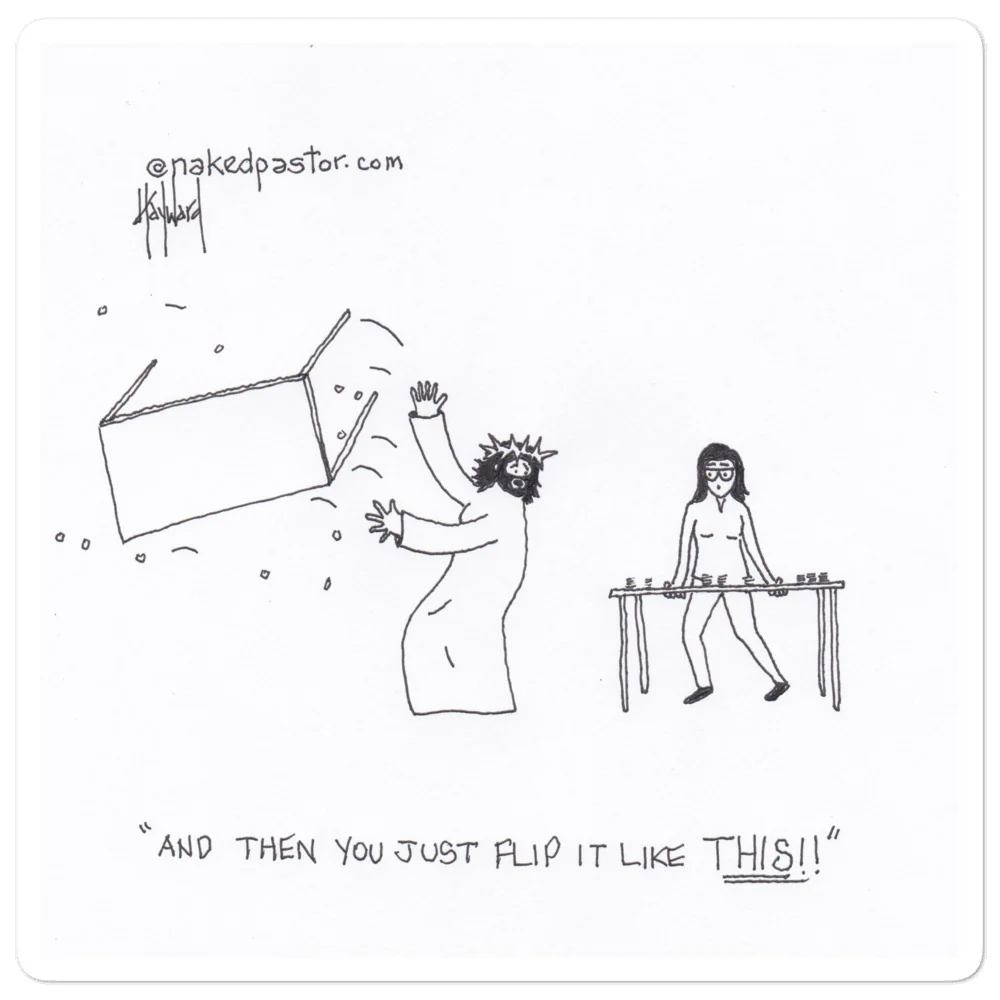
In all four gospels, Jesus cleansing the tables is a pivotal event. It is an act of civil disobedience which leads ultimately to his death. In the synoptic gospels, Jesus cleanses the temple at the beginning of Holy Week, after his triumphal entry on Palm Sunday. This disruption in the Temple then swiftly leads to his arrest, trial, and crucifixion later in the week.
In John’s gospel, however, Jesus cleanses the temple as one of his first public actions. The Jewish authorities’ reaction is still to plot his death, but because John presents a three year ministry, they will have longer to stew on this act of defiance.
Many have suggested the reasons that Jesus might cleanse the temple. Writings suggest that there were concerns with corruption in the temple exchanges, but none of the gospels specifically mention why Jesus would overturn the tables and chase the animals out.
The reason for these exchanges were, I am sure, perfectly legal and practical. The first Temple, built by Solomon, was relatively small, it was a more permanent version of the movable Tabernacle. Archeological evidence tells us that this Jerusalem Temple was one of several temples around Palestine for the worship of the LORD. According to Torah these centers of worship were meant to be religious and communal hubs. Part of the sacrificial system was to provide expiation of sin for the people, but that was not all. Those with means would provide for regular animal sacrifices, as well as grain offerings and well being offerings. These offerings not only provided for the small number of priests (who did not receive an allotment of land on which to grow grain), but also for the poor in the area, the widow, the orphan, and the immigrant.
Solomon’s Temple was destroyed in the Babylonian Exile, and replaced in the time of Nehemiah when the exiles were allowed to return. This second temple became even more central to the religious practice of the Jewish people, and in the succession of restoration and building projects, became even more grand. The most recent restoration was started in the weighing years of the BCE/CE changeover by Harrod the Great. Harrod’s temple was, by all accounts, a magnificent structure to rival (not unintentionally) other temples throughout the Roman Empire. Harrod had also added on a ‘Court of the Gentiles’ where those not of Jewish descent could see the splendor while still (technically) obeying the Jewish Law. This further centralization of religious authority lead to a larger infrastructure of priests, lawyers, scribes, and temple guards. This administrative growth then necessitated a growth in the support for that infrastructure in the form of animal sacrifices, grain offerings, and (a new technological advancement) cold hard cash. It was much easier to carry around Roman coins than drive animals (especially if you are coming from a long way away), so there was a need for an animal market, especially around high holy days like Passover. Seeing an opportunity to serve their community, Temple leaders provided a market right in the Temple itself (in the Court of the Gentiles, it would seem) where worshipers could buy everything they need. But this raised a new problem, the Roman coins that allowed for easy market exchange, also bore the likeness of Caesar, which was a graven image according to Torah. So the Temple leaders (again very legally and conveniently) requested the minting of special Temple coins (bearing the imprint of plants, which technically were not considered graven images; technically) which could be exchanged for Roman coins, and used within the Temple. So the Temple Leaders created a system and structure whereby they were enriched by the ongoing worship of the Jewish people.
If the Temple was busy on a normal day, Passover must have been an absolute madhouse. Passover was one of the three high holy days that all Jewish men were expected to come to Jerusalem. It is estimated that the population of Jerusalem would triple during Passover, from an estimated 50,000 people to 180,000 people (That’s like the entire population of Charleston showing up to Greer over the weekend). With an edict that ALL Passover sacrifices had to be made at the Temple, that meant that literally tens of thousands of sacrifices, and perhaps a lot of money to be made?
In this hubbub, Jesus makes a scene.
Questions for Consideration
- What is the difference between something being legal and something being moral?
- What is your reaction to protest or civil disobedience (and does it make a difference who is doing the protesting or what they are protesting?)
- How might Jesus respond to our churches, our country, our world?