Not From This World
by the Rev. AJ Ochart
Sermon Notes
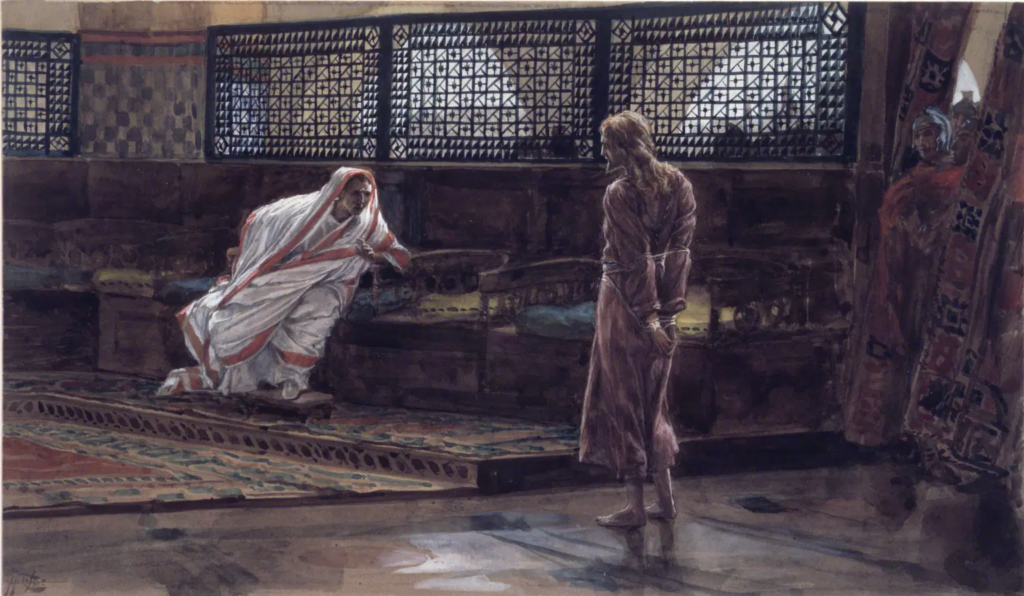
This week, we follow Jesus from the house of Annas, to the house of Caiaphas, to the headquarters of Pontius Pilate. Judea in the first century was an official Provence of the Roman Empire, meaning that they did not have a king (like Galilee’s Herod Antipas), but a military governor assigned by Rome. Pontius Pilate was a ruthless leader who maintained the ‘Pax Romana‘ (Peace of Rome) through the decisive and often lethal use of violence. It is also important to remember, as we are reminded in this passage, that these events take place during the Jewish festival of Passover.
Passover is one of the high holy days of the Jewish faith, and arguably the most important one. It commemorates the redemption of the Hebrew people when they were enslaved by the Egyptian empire, as described in the scroll of Exodus. It was so important that one of the first amendments made to the Mosaic Law was to make allowances for those who, because of ritual uncleanness, are not able to participate in this feast (Numbers 9). Today’s text reminds us of the Passover in reference to the Jewish religious authorities who are bringing Jesus to Pilate; they do not enter into Pilate’s headquarters/home, because doing so would make them ritually unclean and therefore unable to participate in the Passover meal that evening (apparently in their minds, getting someone executed by the state does not carry the same moral weight).
This celebration was also a fraught time politically, partially because the population of Jerusalem would swell to three times its normal level, but also because this celebration of God’s redemption from Egypt, while the people were being occupied by the Roman Empire, certainly raised some nationalistic and revolutionary sentiments.
The religious authorities are cagy about the charges that they bring against Jesus, and Jesus does not provide much more clarity. However, Jesus does present a stark contrast between the kingdom that he represents, and all of the kingdoms that Pilate was used to dealing with.
Questions to Ponder
– How is the ‘answer’ of the religious leaders similar to the answers that we hear from politicians and church leaders of today?
– What ‘uncleanness’ are the religious leaders engaging in, while conspicuously avoiding other uncleanliness? Does this seam familiar?
– What do you make of the offering of Barabbas as an alternative, what do you think Pilate’s intentions would have been, what is the author’s intended meaning for this element?