Comfort and Joy
by the Rev. AJ Ochart
Sermon Notes
This week we continue through the season of Advent, and in the Narrative Lectionary we conclude the Babylonian Exile, and the Hebrew Scriptures.
The original Isaiah was a prophet called during the eighth century BCE, in the years after Israel was defeated by the Assyrian empire. He warned of the coming destruction for Judah, but promised that God would preserve a remnant of faithful people, and one day return them to their own land. He called the leaders and people of Jerusalem and Judah to righteousness and justice. Unfortunately, as his vision in the temple suggested, they would listen but not comprehend, keep looking but not understand, “Until cities lie waste/ without inhabitant” (Isaiah 6:11). Yet “A shoot shall come out from the stock of Jesse” (11:1) and God would raise up a remnant of Israel and Judah to return.
Many years later in the sixth century, after Jerusalem and Judah were exiled to Babylon; these words of Isaiah came to fruition. The Scroll of Isaiah takes a dramatic turn in what we call Chapter 40, from warning with a little bit of hope to “Comfort, O comfort my people” (40:1). Some traditional readings believe that these are words of the original prophet to future generations. Textual analysis suggests that these words are those of a disciple of the original Isaiah (or rather the disciple of a disciple, of a disciple…) who uses the imagery of the Isaiah tradition, and applies it to their present time. Sometimes this unnamed prophet is called ‘Deutero-Isaiah’ connecting them with the tradition that developed the book of Deuteronomy (second telling), and a view of the history of Israel and Judah that saw their destruction as the result of their idolatry and unrighteousness.
The prophet proclaims that God will restore the people back to Jerusalem by way of the LORD’s anointed (messiah) Cyrus the Great of Persia. In the years since the destruction of Jerusalem by the Babylonian empire, the Persian empire was ascending. The two empires waged war against one another for years until king Cyrus of Persia won a decisive victory against Babylon in 539 BCE, capturing king Nabonidus of Babylon. While the Babylonians ruled by dividing populations through exile and moving people around, the Persian empire preferred that ethnic and cultural peoples stayed together. After absorbing the Babylonian empire, Cyrus made a declaration that all exiles could return to their homelands.
The prophet gives words of hope and joyous return to the people of Judah and Israel and pronounces judgement upon the Babylonian empire and their injustice and violence. The prophet also looks forward to the servant of the LORD. Unlike the majesty of Cyrus, this servant would be humiliated but ultimately vindicated. The servant may be an image of the exiled and restored Hebrew people, or a future leader who would be humiliated and vindicated, winning salvation for their people.
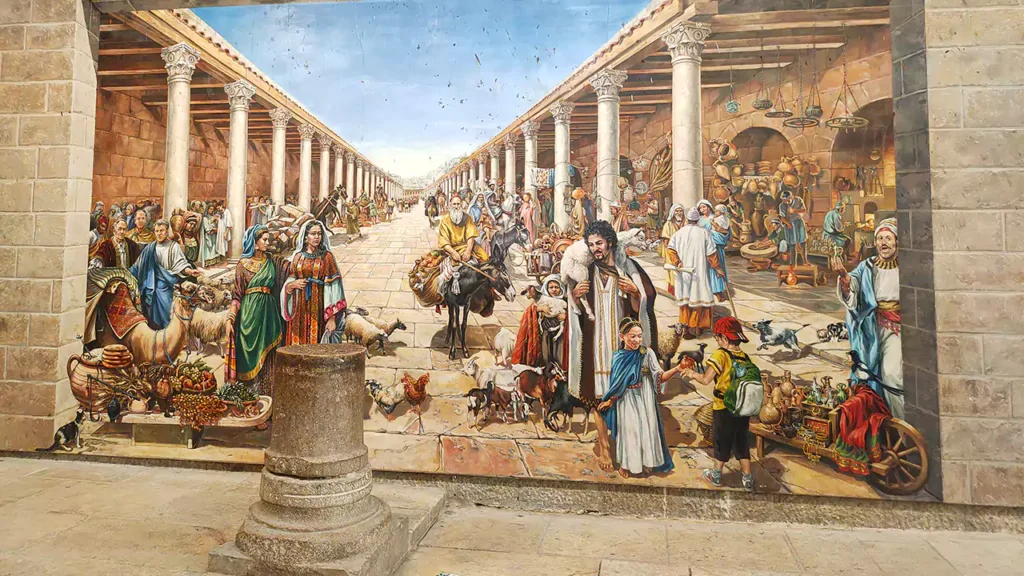
In this week’s reading the prophet acts as a seller in the marketplace, commending their wears. But unlike the water, bread, and wine of the regular marketplace, these goodies are a stand-in for the abundant grace of God who has redeemed their people.
Questions to Consider
- In what ways do you spend and labor for that which does not satisfy?
- What does the liberation and restoration for these exiled people mean for us today?
- How is the mystery of God’s ways a blessing and a challenge?