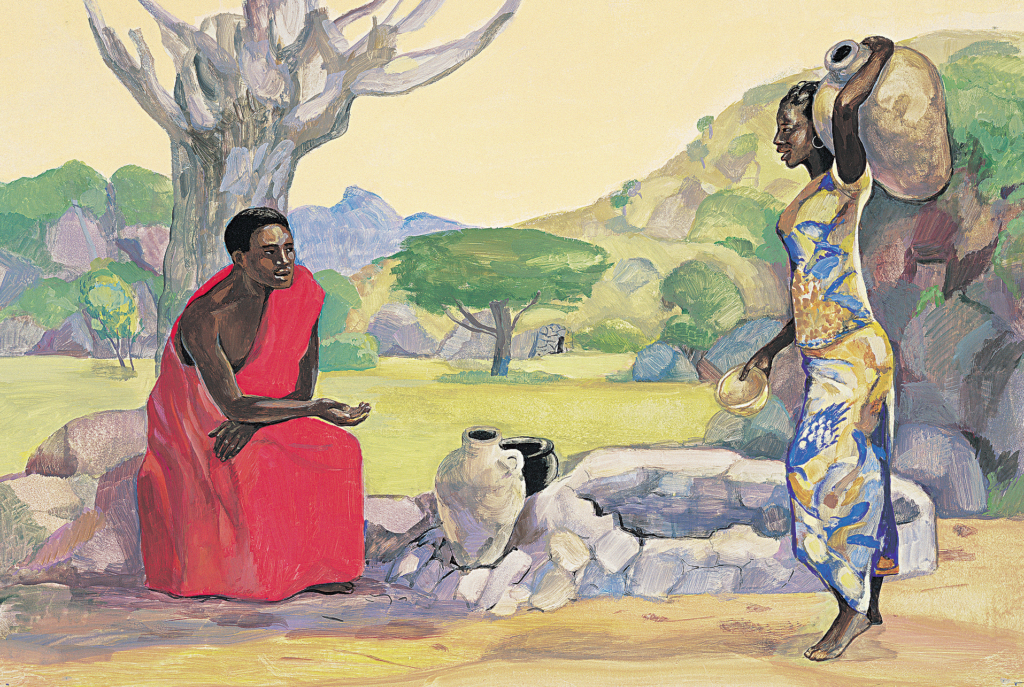
Non-Local
by the Rev. AJ Ochart
Once again, there will be no in-person worship service this week!!
Due to weather, we have a pre-recorded virtual worship service again for this week. Join us (if and/or when you can) for a service of worship from your home. Many thanks to Kenneth, Shannon, and the choir who recorded the hymns, and to Rita who recorded the lay leader elements. Also, as a special treat, the Scripture reading is also performed by the Croston family!
We will be celebrating communion this Sunday. Gather some elements (bread and juice/wine if you have it, something to eat and something to drink if you don’t) so that we can eat together (while also being apart).
Without giving it away, this was a perfect Sunday sermon to be virtual, but… you’ll just have to watch to find out. The service will be available on our YouTube Channel at 10:30am (it will act like a livestream, so that everyone is watching at the same time; I did not do that last week, since some people wouldn’t/didn’t have power).
Sermon Notes
Today we have another dialogue between Jesus and a surprising person. This time it is a woman from Samaria. The Samaritans (or Israelite Samaritans, as they prefer to be called) have an interesting history. They are an ethnoreligious group, a semitic people indigenous to Palestine. Modern day Israelite Samaritans primarily live in Holon and the West Bank. They trace their lineage to the ancient nation of Israel, and specifically the tribes of Ephraim and Manasseh, the sons of Joseph.
According to our Hebrew Scriptures (which is mostly written from the perspective of the southern nation of Judah), the twelve tribes of Jacob/Israel were united for a time under Saul, David, and Solomon, and then split. They remained frenemies until Israel was destroyed by the Neo-Assyrian Empire.
According to the Samaritan Israelites, the split happened before either nation had a king; when Eli the priest set up the Tabernacle at Shiloh, in opposition to the High Priest at Gerizim. In Deuteronomy and Joshua, Gerizim is named as the “mount of blessing,” and a direct descendant of Aaron was serving as the high priest there. According to the books of Samuel, the twelve tribes united(ish) under Saul, spit for a time after Saul’s death, and then were united again under David. David established a new political capital at Jerusalem, and brought the tabernacle there (uniting the political and cultic/religious power). Solomon then built a permanent Temple in Jerusalem, expecting all of the tribes to worship there.
After the death of Solomon (and according to Kings, as punishment for his sins) the northern tribes broke away from Judah forming the nation of Israel (not the same as the modern nation of Israel). King Jeroboam of Israel, not wanting Israelites to travel to Jerusalem for worship, established Dan and Bethel as worship sites for God (according to Kings, he also built golden calves for this worship), and Mt. Gerizim remained a place of worship for the Israelites. In the 8th Century BCE, the nation of Israel was defeated by and became a vassal state of the Neo-Assyrian Empire. As part of this occupation, the Assyrians removed a part of the population (likely around 10%), mostly the more educated and elites. Some of the remaining Israelites migrated to Judah for protection, but most of them stayed in their homeland. The Neo-Assyrian Empire also relocated some people from other parts of the empire to Israel, though it does not seem that there were huge numbers (however, later Jewish Rabbis and historians would point to this fact as reason to exclude the Samaritans/Samaritan Israelites as less than pure). At this point, all of the ‘twelve tribes’ worshiped the LORD, and held the Torah (first 5 books of the Hebrew Scriptures) as sacred.
In the 6th century BCE, the Babylonian Empire defeated the nation of Judah, and brought a number of Judahites (again primarily the educated and elite) to Babylon. It is during this time when much of the Tanakh (Hebrew Scriptures) were collected, edited, and written by these exiled Judahites. When the Babylonian empire was taken over by the Persian Empire, these Judahites were allowed to return home and rebuild Jerusalem and its temple. The Judahite leaders Ezra and Nehemiah had conflict with the peoples who were already in Palestine, primarily the descendants of the nations of Israel and Judah. They all honored Torah, but the exiles also had additional writings of Tanakh, which they believed pointed to the primacy of Jerusalem/Zion and that particular Temple. The Samaritans (so called for their capital city of Samaria) continued to worship at Mt. Gerizim and even built a Temple there in the 4th Century BCE. The Judahites continued to add to the Tanakh that we know as the Hebrew Scriptures.
In the following centuries, tension continued between the two peoples. The Persian Empire was defeated by Alexander the Great and all of their lands became a part of the Greek Empire. After the death of Alexander, Palestine was ruled first by the Ptolemies in Egypt, and then the Seleucids in West Asia. It was during this time that the Judahites gained the name of the “Jewish” people, based on the Greek pronunciation of their own name. The Jewish people briefly gained independence under the military leadership of the Maccabees, but then were defeated again by the Roman Empire.
For a while, the whole region was ruled over by Herod the Great, the Roman appointed Ethnarch (or ‘King of the Jews’). While he was ethnically Jewish, he cared little for the cultic practices of the Jewish people. However, in order to gain their approval, he started a multi-decade rebuilding program of the Temple in Jerusalem. When Herod the Great died, his rule was given to his sons as Tetrarchs (literally ‘ruler of a quarter,’ intentionally not ‘king of the Jews’). Judea (as it was now called), Samaria, and Idumea were granted to Herod Archelaus, but his tetrarchy was soon revoked and made a Roman Provence, under the direct control of a Roman Military Governor (Grand Moff Tarkin would approve). Galilee, mostly inhabited by those who considered themselves Jewish, was granted to Herod Antipas, who remained in control until Jesus’ time.
Under Roman occupation, both the Jewish and Samaritan peoples were given limited authority over their own cultic/religious practices, but continued to argue with one another as to where the appropriate place to worship were, Jerusalem or Gerizim. As is often the case with oppressed peoples, they were motivated to look down on one another, therefore slightly raising their own status. These tensions would rise and fall throughout the years, sometimes becoming violent or blasphemous (there are reports of Samaritans bringing pigs into the Jerusalem Temple).
The Christian Scriptures have a few different perspectives on this tension between these peoples. Here in John’s gospel there is a drastic division between the Jewish people and Samaritans, noting that they are unable to drink from the same cup (therefore treating the Samaritans as wholly separate people, like the rest of the gentiles). The parable of the Good Samaritan plays on this assumption of the Samaritans as a hated (or at least ‘othered’) people. We saw last year, however, that Luke-Acts treats the Samaritans as less separated from the Jewish people noting that the Samaritans readily believed in Jesus.
In this week’s text, Jesus and his disciples travel through Samaria on their way from Judea to Galilee.
Questions to Ponder
– Is there a group that you can think of that plays a similar role as the Samaritans, those who are mistrusted and ‘othered’ by some?
– What are some important physical places to you personally, religiously, and/or spiritually?
– How do you feel about virtual worship?