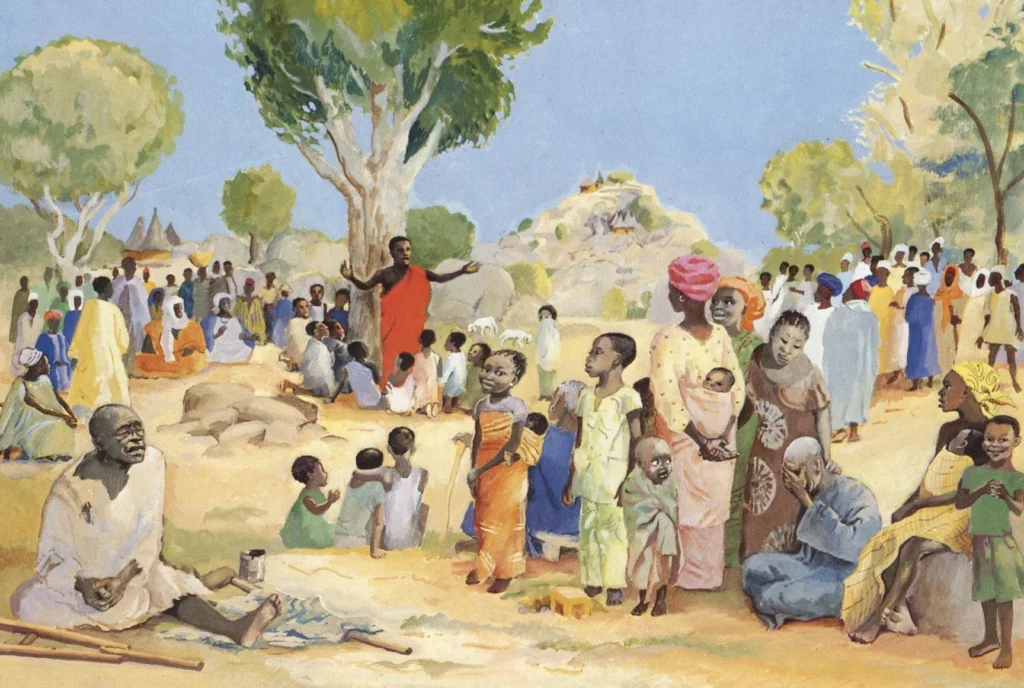
To Help Other People at All Times
by the Rev. AJ Ochart
This week we are back in the Sanctuary, celebrating the Souper Bowl of Caring, and celebrating with our local Scout Troop! Join us (if you can) for a soup luncheon after worship, raise money for the food pantry, and help pack soup making kits for our neighbors. You can also stick around after worship for a lesson on the Letter of James from Doug Burry, or join the young adults in a Kindred Groups version.
Sermon Notes
This week’s scripture follows closely after the one for last week. Jesus has made it to Galilee, and back to Cana (where he turned water into wine). There, he meets a ‘royal official. ‘ In Galilee, that most likely means that he is a member of the court of Herod Antipas, tetrarch of Galilee and Idumea, who you may have read about last week. This is a fact that might make us pause.
While it is not recorded in John’s gospel, according to the synoptic gospels Herod Antipas was responsible for the imprisonment and beheading of John the Baptizer. Outside of that, we know that this Herod, while not as bad as his father, was still a ruthless leader with little actual concern for the everyday people under his rule. According to some biblical scholars, one of the reasons that Jesus’ ministry took off among the poor people of Galilee was a direct result of Herod’s actions. Not long before the events of the gospels, Herod Antipas built his new capital, named Tiberias after the Caesar, on the Sea of Galilee (which also got renamed to the sea of Tiberius). The city was built there because of the seventeen mineral hot springs there, but also to establish a fishing industry (which made him quite rich). Tiberius was a source of great wealth for the elites in Herod’s court (like this royal official) but meant economic doom for the traditional fishing villages of Galilee who could not compete with Herod’s fleet of fishing vessels. Jesus then came preaching liberation and equality to those who were destitute. Other gospels picture Jesus calling fishermen like James and John, who leave their father, even being an itinerant teacher pays better than fishing these days.
Suffice it to say, we could forgive Jesus a little hesitancy when asked by this collaborator to heal his son. Yet it is a child on the line, a child who had no choice in being born into an elite household, who did not contribute to the impoverishment of his own people.
In the second story, Jesus is back in Judea, and heals a man at the pool of Beth-zatha, and gets in trouble for it by the Jewish authorities because, once again, he has healed on the sabbath.
In both stories of healing, people are implicitly asked to focus on what is the most important, human health and flourishing, or petty arguments and interpretations.
Questions to Ponder
– How do matters of class and privilege come into decisions that you make, or that you see others make around you?
– What are things that you are tempted to focus on, even though they may not be the most important?
– How have you struggled with prioritization?