Sighted by the Light
by the Rev. AJ Ochart
- Join us for Welcome Breakfast at 9am
- Session Meeting after worship
Sermon Notes
This week we skip quite a bit ahead in John’s gospel: Jesus’ authority is questioned by the religious elites, he says that while he cannot testify to himself, he has several reliable testimonies from: John the Baptizer, the signs that he has performed, God the Father, and the scriptures themselves. After that, Jesus goes back to Galilee where he feeds five-thousand (plus) people with only a small amount of food. Many in the crowd want to “take him be force and make him king,” so Jesus hides in the mountains. The disciples leave on a boat, and Jesus walks to them on the sea. The crowd continues to follow them, and do not stop until he tells them that he is the bread from heaven, and that “unless you eat the flesh of the Son of Man and drink his blood, you have no life in you.” Many say this is too hard, but the twelve continue. Later, Jesus’ brothers (including James?) want him to take the show on the road, and go to Jerusalem for the festival of Booths (a remembrance of the Hebrew’s time in the wilderness). He initially rejects the idea, but then attends in secret, teaches the crowd, and then stands up on the final day (when the Priests would be reenacting Moses getting water from the stone) to say “Let anyone who is thirsty come to me, and anyone who believes in me drink.” Rumors grow about him, some thinking that he is a prophet, others thinking he is messiah, and others thinking that he is crazy. The authorities try to have him arrested, but it fails. Jesus also uses the metaphor of light, claiming that “whoever follows me will never walk in darkness.” The religious elite once again question Jesus’ authority, which ends up in him claiming that they are sons of the devil, which was not well received.
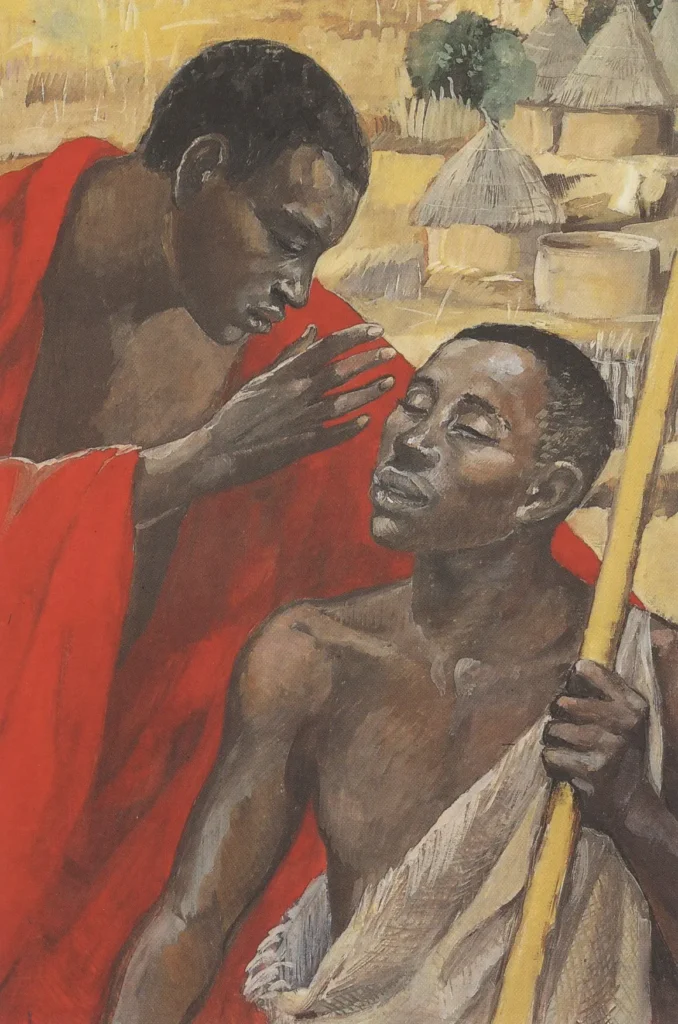
In todays text, Jesus and his disciples encounter a man who was born blind, and the disciples ask about the reason, “who sinned, this man or his parents, that he was born blind?” This question is rooted in a simplistic view of morality that was common at the time. Inspired by scriptures like Proverbs, they have the idea that God always rewards righteousness, and punishes unrighteousness. Ergo, if this man was born blind, either it was punishment for something that he did before he was even born, or as punishment on his parents. This morality is countered in other places of the Hebrew Scripture in the Psalms, Ecclesiastes, and especially Job. In Job, the titular character endures all sorts of terrible things, and his friends insist that it must be punishment for something he did. Job insists, however, that he is innocent and eventually calls God down to give an answer. God appears in a whirlwind and gives a pretty unsatisfying answer of ‘you don’t know everything, so you can’t understand what I am doing here.’ Jesus gives a similar answer, telling them that this man was born blind to show forth God’s glory, and heals him.
In the Jerusalem Religious System, the people are represented by two separate, yet equally important groups; the Pharisees, who investigate crime; and the Sanhedrin who decide on matters of Torah observance. These are their stories (Dun Dun).
Questions to Ponder
– What kind of explanations do you expect for bad things that happen to you or other people?
– Have you experienced healing that you would consider miraculous?
– How do you experience the tools and tactics of those in authority?