Bowing Down
by the Rev. AJ Ochart
Sermon Notes
This week we begin the season of Advent. We are going to be doing a ‘Greening of the Sanctuary’ service with chair aerobics afterwards, so wear comfortable clothes and supportive shoes.
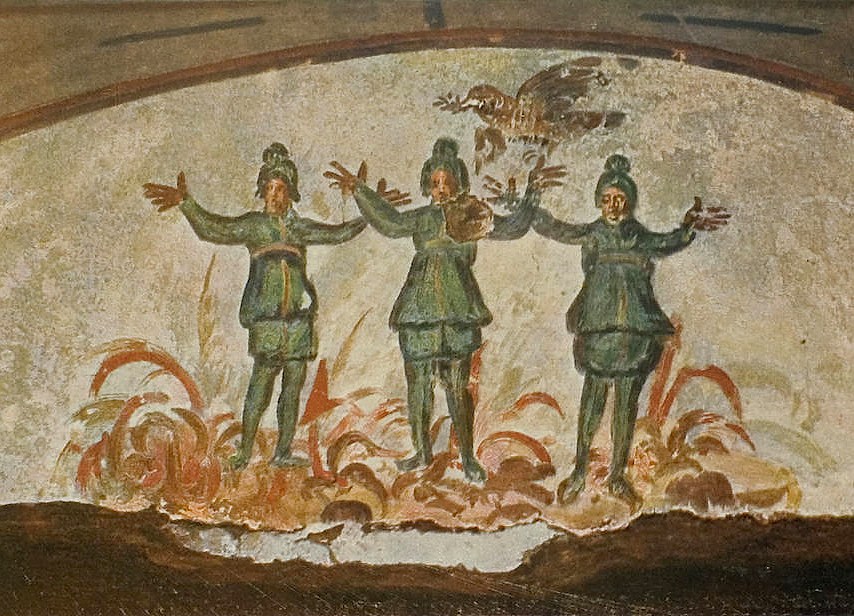
Our text for this week is from the scroll of Daniel, which is set in the early days of the Babylonian Exile. In chapter one, we meet the titular character, Daniel, who has been forcibly brought to Babylon to be trained as a court official. He is accompanied by three other Hebrews, Hananiah, Mishael, and Azariah. They are all given Babylonian names; Daniel is renamed Belteshazzar (which does not stick), and his friends renamed Shadrack, Meshack, and Abednego (who we will meet in this week’s text). Chapter two tells of a contest in which Daniel is able both to recite and interpret a dream of Nebuchadnezzar the king. In this tale, Nebuchadnezzar builds a huge statue, and expects everyone to bow down and worship it. Shadrack, Meshack, and Abednego must make the decision to bow down, or face the consequences.
The scroll of Daniel is a strange one. Chapters 1-6 are made up of ‘court tales’ stories of Daniel (or his friends) interacting with various leaders of the Babylonian, Median, and Persian empires. The stories span the length of the Exile. Each story is a separate narrative, with little reference between them, and are told with dramatic (sometimes even melodramatic) flare. The second half of the scroll is made up of apocalyptic oracles concerning the fall of Babylon, the rise of Persia, and the rise and dispersal of the Greek Empire. Many biblical scholars believe that these oracles were written in the 2nd Century BCE under the Greek Ruler Antiochus IV Epiphanies. The scroll is also preserved in multiple languages, with the first chapter and then 7-12th chapters written in Hebrew, and chapters 2-6 written in Aramaic. IN the Hebrew ordering, Daniel is sorted in the Ketuvim (writings).
This story, as theatrical as it is, still gives a glimpse of what resistance in the face of Empire looks like. It tells the story of brave men who refused to comply with orders that they saw to be unlawful. It tells of the God who accompanies their followers into the fire, and keeps them safe.
Questions to Consider
- What would you do if asked to bow down to the golden statue?
- What parallels do you see between the story and our lives today?
- How does God accompany us in the fire?