On Purpose
by the Rev. AJ Ochart
Last week we were introduced to the Covenant at Sinai with the Ten Commandments. After God spoke these words to the recently emancipated Hebrews, they said that they could not handle hearing directly from God, and told Moses to go up the mountain and listen to God for them. Moses then spent forty days on Mt Sinai receiving the Torah of God. When Moses returns; however, the Hebrews are in the midst of breaking most (if not all) of the commandments by creating a golden calf to worship and reveling. Moses breaks the tablets on which Torah was written and slaughters many of the Hebrews. There is a disturbing story where the LORD threatens to wipe out these people again, but Moses talks God out of such rash action against these people that God has redeemed, and in the end the LORD gives instruction on how to create a Tabernacle (tent of meeting), where the LORD’s presence will be with these people (even if they are stiff-necked). The scroll of Exodus ends with the Tabernacle being dedicated, but even Moses unable to enter.
The scroll of Leviticus is instruction primarily for the tribe of Levi, the priests, and the High Priest. Aaron, Moses’ brother, is chosen as the first High Priest. The scroll is greatly concerned with the concept of ritual cleanness and uncleanness, so that these representatives are able to serve without God’s holy presence killing them. in the first half of the book, there is another disturbing story of Aaron’s sons bringing ‘strange fire’ into the tabernacle, and being struck down dead. This story is an introduction to the literal center of the scroll, the Day of Atonement, when the High Priest enters into the Holy of Holies (where the presence of the LORD dwells) to sanctify it.
The scroll of ‘Numbers’ is one of the worst named books, at least in English; the Hebrew name is ‘the Wilderness.’ This scroll tells of the Hebrews leaving Sinai and traveling to the Jordan river, the border to the Promised Land of Canaan. Moses sends twelve spies into the land to check it out, but most of them believe that the LORD will not be able to protect them, so they refuse to go in. In response, The LORD dooms that generation to wander in the wilderness until they die. The narrative gives several examples of their rebellion, and the death of Miriam and Aaron. The narrative eventually tells of the second generation who comes back to the Jordan in order to enter the land again. Moses is not allowed to enter the land, but is instructed to pass on leadership to Joshua (one of the two spies who believed that God would be with them.
Deuteronomy (literally ‘second telling’) is Moses’ final speeches to the Hebrews, reframing the Torah instruction that he received at Sinai, and setting before them the choice between life (following God’s vision of human flourishing) or death (following the ways of violence and fruitless worship). Then Moses passes authority to Joshua, and dies. These five scrolls (including Genesis) make up what our Jewish siblings call ‘Torah’ and some Christians call ‘the Pentetuch.’
The scroll of Joshua is a part of the Deuteronomistic Histories (likely written by the same people who wrote Deuteronomy), and is the first scroll in the Jewish Nevi’im (prophets). It tells of Joshua’s military campaigns into occupying or possessing the land of Canaan. This brings up a whole lot of questions about colonization, occupation, genocide, and difficult events from the history (and present) of Israel and the United States. That being said; however, some things to keep in mind about these ‘conquering’ narratives: 1) the scroll of Joshua was written hundreds of years after the events that it proports to chronical, and likely exaggerates (just how well could Robin Hood shoot an arrow again?), 2) the text itself contradicts its own hyperbole (e.g. in one moment we are told they ‘utterly destroyed’ a city, and a few chapters later the inhabitants of that same city are threatening the peace of the area), 3) this scroll was also likely written as the (now Jewish) people are returning from Exile, and are therefore interested in supporting their legitimate claim to the land, and 4) part of the purpose of this Deuteronomistic history is to retell these stories with a view of the Exile, and the lack of righteousness and justice that led to it.
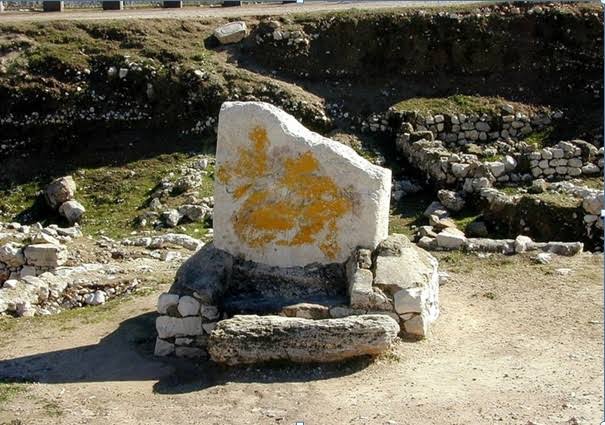
Our text for this week is set at the end of Joshua’s life, after the land has been ‘conquered’ and divided among the tribes. Joshua calls all of the elders of the tribes to Shechem, back to the Jordan River which served as the border of their lands. He calls them back to renew the covenant (just like Moses before him) and implore them to choose to serve the LORD, and not the other gods; to life into God’s vision of human flourishing, rather than the violence and death of the nations (and empires) around them.
Questions to Consider
– How has God been faithful to you in the past?
– When have you ‘decided to follow Jesus’?
– What unique challenges do we face today, and what blessings have we been given?