Graves of Egypt
by the Rev. AJ Ochart
Genesis ends with Jacob/Israel and his family moving to Egypt in order to survive the famine that Joseph had foreseen. The next scroll, Exodus begins later (215-430 years, depending on where you get your numbers). A new king arises in Egypt, but this one does not know about Joseph. What he does know is that there are a people who are definitely not Egyptian. At some point (perhaps during a time of economic anxiety?) he worries that these Hebrews (i.e. foreigners, immigrants, illegals) are in his land; and spins all sorts of possibilities about what harm they might bring. His solution is to enslave them and extract their labor for his own gain. However, God’s blessing is greater than that of Egyptian Empire, and they continue to be fruitful and multiply. He then engages in a set of schemes that will reduce the population of males (who he fears will one day rise up), first secretly and then with an edict that the baby boys must be thrown into the Nile river.
One woman complies with the edict (technically), she just puts her baby in a basket (ark) first. The baby is discovered by the daughter of Pharoah, and she raises him as her own and gives him the name Moses (in Hebrew, this sounds like ‘draw out’). Moses grows up in the house of pharaoh, but one day kills an Egyptian guard who is abusing one of his fellow Hebrews, because of this he flees to the land of Midian. In Midian he makes a new life for himself, but is called by God in a burning bush to go back to Egypt to free his people. He does so (reluctantly).
When Moses asks for the Hebrews to go free (initially for a three day journey into the wilderness to worship their god), Pharoah refuses, and makes their work harder. What transpires are ten ‘strikes’ (or plagues) against Egypt, acts of de-creation which prove the power of the God of the Hebrews over that of the Egyptians. The final plague is the story of Passover, in which the first-born son of every household will die unless the house is marked with the blood of a sacrificial lamb. This final strike is enough to convince Pharoah (at least for a little while) to let all of the Hebrews (including women, children, and livestock) to leave.
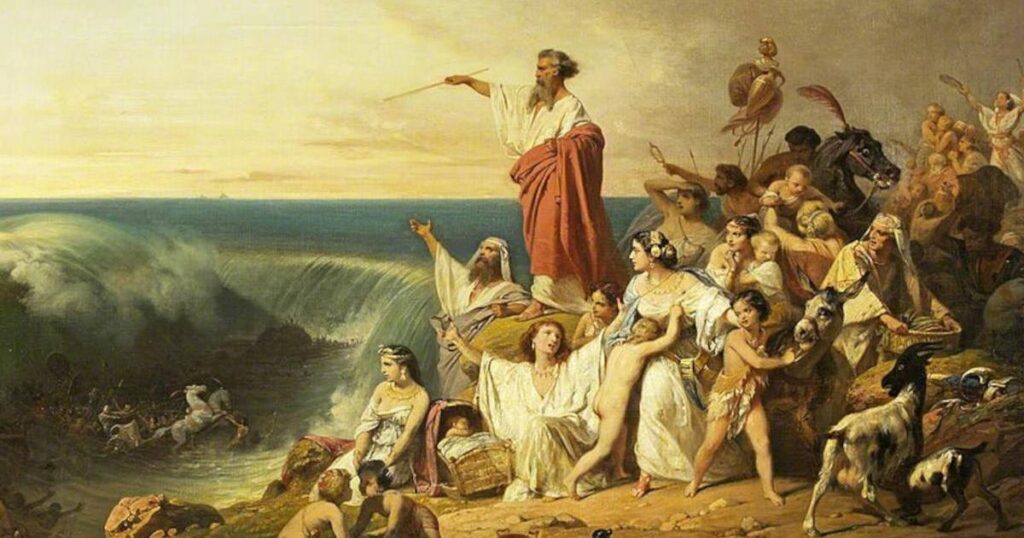
Now the Hebrews find themselves at the edge of the sea, and Pharoah has a change of hard heart.
Note: AJ will be out of town this week on Vacation, so Trey will be preaching. This also means that we will be celebrating Communion the following week.
Questions to Consider
– From what have you been freed?
– What are the challenges or worries that come from freedom?
– Have you ever second-guessed a decision?