Our Daily Bread
by the Rev. AJ Ochart
Sermon Notes
This week, we continue in the scroll of Exodus. Moses did indeed go to Pharoah to ask for the people to be freed, but Pharoah was as stubborn as Moses was with God. When first asked to let the people go, Pharoah insisted that they needed to work harder, expecting them to produce the same amount of bricks without being given the same supplies. This made the Hebrews mad at Moses as well.
Over the next period, Moses would meet with Pharaoh and insist that his people be allowed to go into the wilderness to worship the LORD, but Pharaoh refused. Nine de-creative acts were unleashed on Egypt, from water turning into blood to darkness that can be felt, but Pharaoh insisted that the people remained. The Hebrew people, for their part, learned over this time to trust in the words of Moses and Aaron, and that the LORD was fighting on their side.
The final de-creation was birth of the firstborn. The Hebrews were instructed in the first Passover, to sacrifice a lamb and smear its blood on their doorframes. The death angel, or destroyer, or the LORD themself came into Egypt, and killed the firstborn son behind any door that was not marked with the blood. Literarily this is meant to be a clear parallel to the Pharaoh’s instruction at the beginning of the scroll to kill every Hebrew boy (but it is still a horrific thought). When Pharaoh’s own son is not spared, he finally relents and lets the people go.
Moses leads the people to the Red Sea (or Sea of Reeds), but they are soon chased by the Egyptian army lead by Pharaoh who has changed his mind. God makes a way through the sea, and the Hebrews pass through the waters, while Pharaoh and his army are drowned.
In the wilderness of Sin (pronounced like ‘sign,’ like Mt Saini) they encounter more problems. They find some water, but it is undrinkable. We then begin a pattern that will become excruciatingly familiar, the Hebrews complain about being out in the wilderness, where they believe Moses has led them to die. The LORD has Moses throw a stick into the water, and it is cleansed.
Now, one whole month into their Redemption, the Hebrews are complaining once again, this time about the lack of food. The LORD will supply their need, but also provide a test.
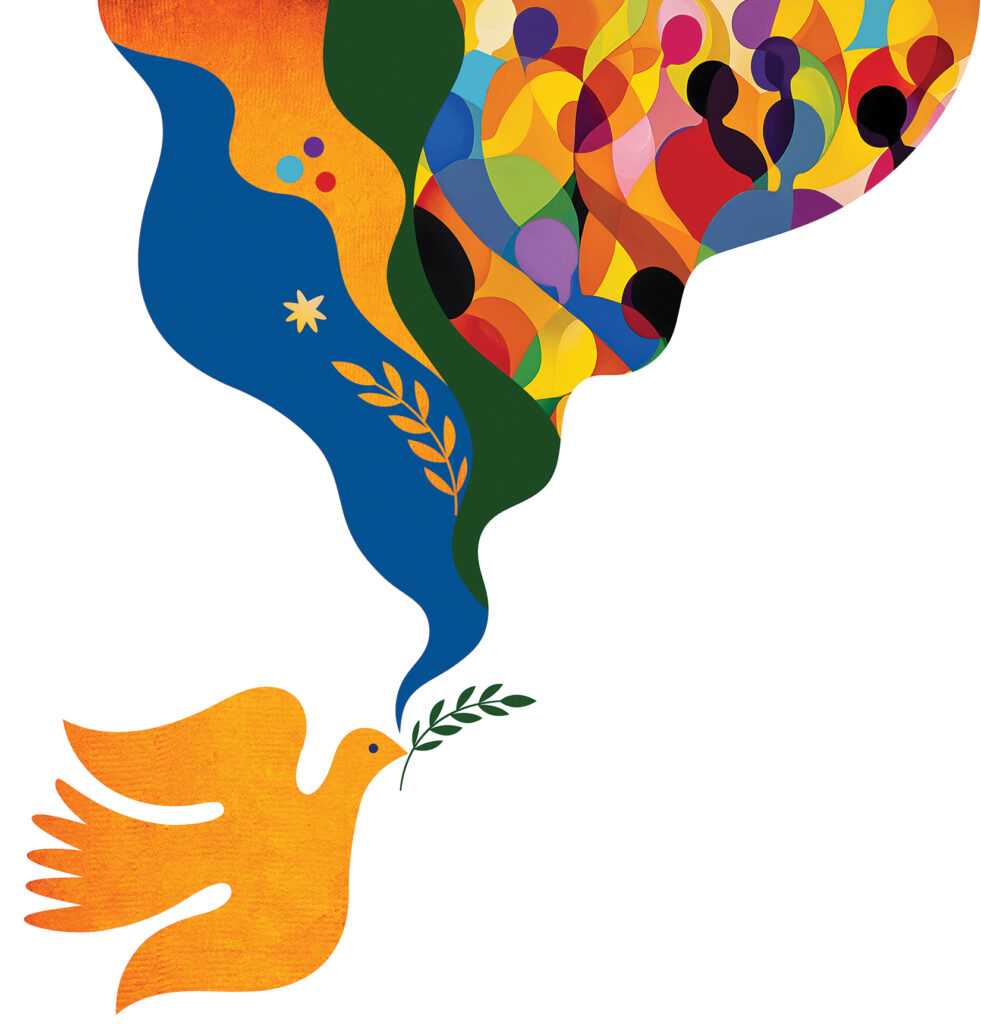
This is also World Communion Sunday. Some traditions celebrate the Lord’s Supper weekly, others monthly, and still others quarterly or some other frequency. On World Communion Sunday, every participating congregation celebrates the glorious feast of the people of God together. It is a reminder that in this meal we are connected with all of those around the world who eat of it. We will also take up the Peace and Global Witness Special Offering which funds peacemaking efforts locally and internationally.
Questions to Consider
- What do you do when things get difficult?
- How has God provided for you in the past?
- What does this story tell us about the distribution of resources?